
Vision Zero in Pennsylvania: How Communities Are Advancing Safer Streets
Across Pennsylvania, cities and counties are accelerating efforts to eliminate traffic fatalities and serious injuries. While each community approaches Vision Zero differently, they share a commitment to safer, more accessible streets for people walking, biking, driving, or using transit. Here’s a look at how communities across the Commonwealth are putting Vision Zero principles into action.
Philadelphia
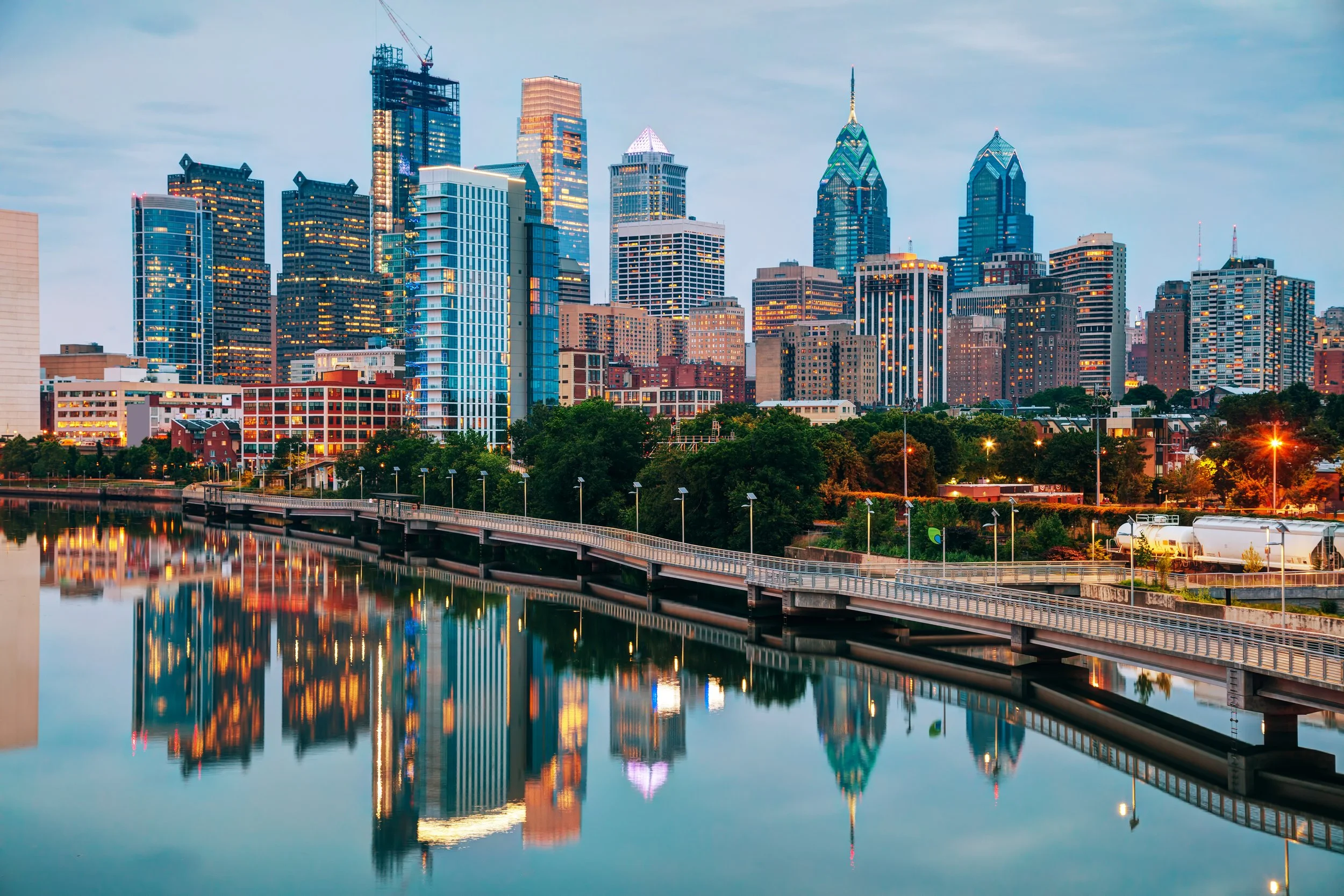
Philadelphia’s Vision Zero Action Plan 2030 continues to focus on the city’s High Injury Network, where the majority of serious and fatal crashes occur. Efforts include automated speed enforcement, pedestrian refuge islands, redesigned corridors, and expanded neighborhood Slow Zones. The city’s data-driven approach ensures that limited resources are prioritized on the most dangerous streets first.
Learn more:
Vision Zero Philadelphia (official program): https://visionzerophl.com/
Vision Zero Action Plan 2030: https://visionzerophl.com/plans-and-reports/action-plan-25-30
City announcement on the Action Plan: https://www.phila.gov/2025-11-25-city-of-philadelphia-releases-vision-zero-action-plan-2030
Pittsburgh

Pittsburgh formally adopted Vision Zero in 2024 and has rapidly scaled safety investments. The city has increased funding for traffic calming, completed or initiated more than 50 corridor and intersection safety improvements, and reported notable reductions in crashes since 2021. Many projects are concentrated near schools, parks, and commercial districts where pedestrian activity is highest.
Learn more:
City of Pittsburgh Vision Zero page: https://engage.pittsburghpa.gov/vision-zero
BikePGH overview of Vision Zero efforts: https://bikepgh.org/our-work/vision-zero
City bulletin on Vision Zero initiatives: https://content.govdelivery.com/accounts/PAPITT/bulletins/3f73206
Lancaster (City & County)

Lancaster City’s Vision Zero plan emphasizes equity, intersection daylighting, leading pedestrian intervals, and expanded bike infrastructure. Lancaster County has since adopted a countywide Traffic Safety Action Plan, building on the city’s work and extending Vision Zero strategies to suburban and rural communities throughout the region.
Learn more:
Vision Zero Lancaster (City): https://visionzerolancaster.com/
Lancaster County Traffic Safety Action Plan: https://lancastercountyplanning.org/328/Traffic-Safety-Action-Plan
Delaware County
Delaware County became the first county in Pennsylvania to adopt a Vision Zero Action Plan. Using crash data to identify high-risk corridors, the county is pairing engineering improvements with education and outreach through its Safety Ambassador program. This regional approach provides a strong model for coordinating safety efforts across multiple municipalities.
Learn more:
County announcement on adopting Vision Zero: https://delcopa.gov/news/delaware-county-adopts-vision-zero-action-plan-improve-road-safety
Background on plan development: https://delcopa.gov/news/delaware-county-developing-vision-zero-action-plan
Reading
Reading is exploring a Vision Zero–inspired approach as part of its broader transportation and safety planning efforts. The city is leveraging state and federal funding opportunities to evaluate high-crash corridors, improve pedestrian crossings, and assess traffic-calming strategies in neighborhoods with the greatest safety needs. Community engagement and data analysis are central to the process, positioning Reading to move toward a more formal Vision Zero framework as planning advances.
Learn more:
Spotlight PA reporting on Reading’s traffic safety planning:
https://www.spotlightpa.org/berks/2025/08/reading-pennsylvania-traffic-safety-plan-vision-zero-local-government/City of Reading Vision Zero planning event:
https://www.readingpa.gov/calendar/vision-zero-action-planBerks County MPO active transportation planning (Reading area):
https://www.berkspa.gov/getmedia/6214d108-3aa2-4da1-b66b-956f3f616218/11b-DRAFT-RATS-Walkworks-LOC-for-West-Reading.pdf
Bethlehem & the Lehigh Valley
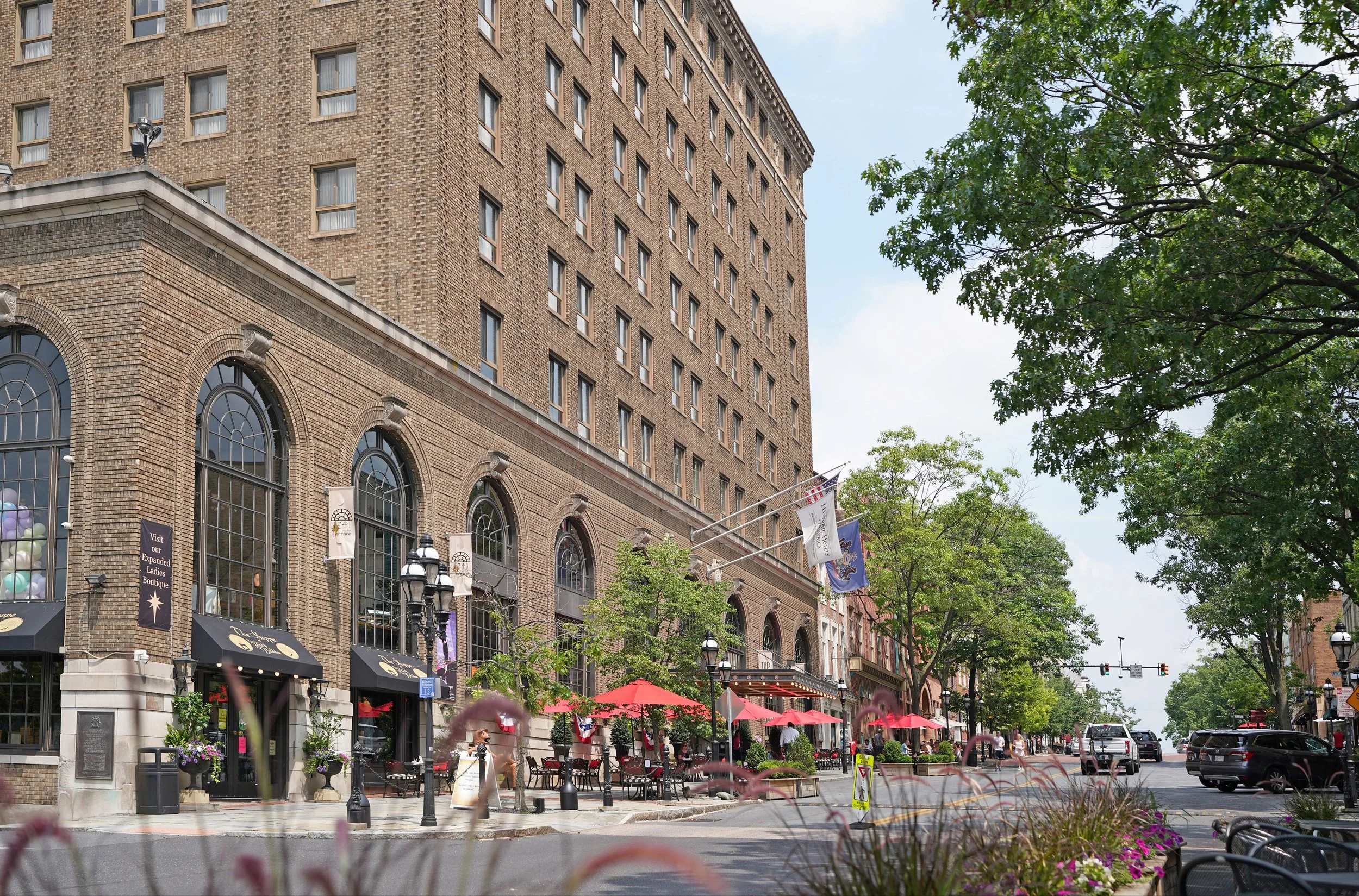
Bethlehem and the broader Lehigh Valley region are incorporating Vision Zero principles into long-range transportation and land-use planning. Efforts focus on safer crossings, traffic calming, and improved access for pedestrians and cyclists, often aligned with regional goals led by the Lehigh Valley Planning Commission.
Learn more:
Lehigh Valley Planning Commission transportation & safety initiatives: https://www.lvpc.org
Regional Vision Zero tools and safety planning context (DVRPC): https://www.dvrpc.org/transportation/safety/visionzero/
What This Means for Communities Across the Commonwealth
These examples show that Vision Zero is not a one-size-fits-all initiative. Large cities, small municipalities, and counties alike are using data, public engagement, smart design, and equitable planning to reduce traffic-related harm. Whether a jurisdiction is implementing major infrastructure upgrades or starting with targeted pilot projects, Vision Zero offers a flexible framework for making safer mobility decisions.
For communities evaluating curb management, pedestrian safety, or long-term transportation planning, these Pennsylvania examples demonstrate what’s possible regardless of size, geography, or budget.
Where Does PTAP Come In?
PTAP member organizations, including consultants, technology providers, and mobility experts, play a critical role in helping communities plan and implement Vision Zero strategies. Each organization mentioned here is a PTAP member, and PTAP continues to work closely with industry professionals across the Commonwealth to understand evolving challenges, share best practices, and provide education and resources that support safer streets.
Want to learn more? Join PTAP today, and be sure to register for the 2026 Annual Conference & Trade Show this spring.